
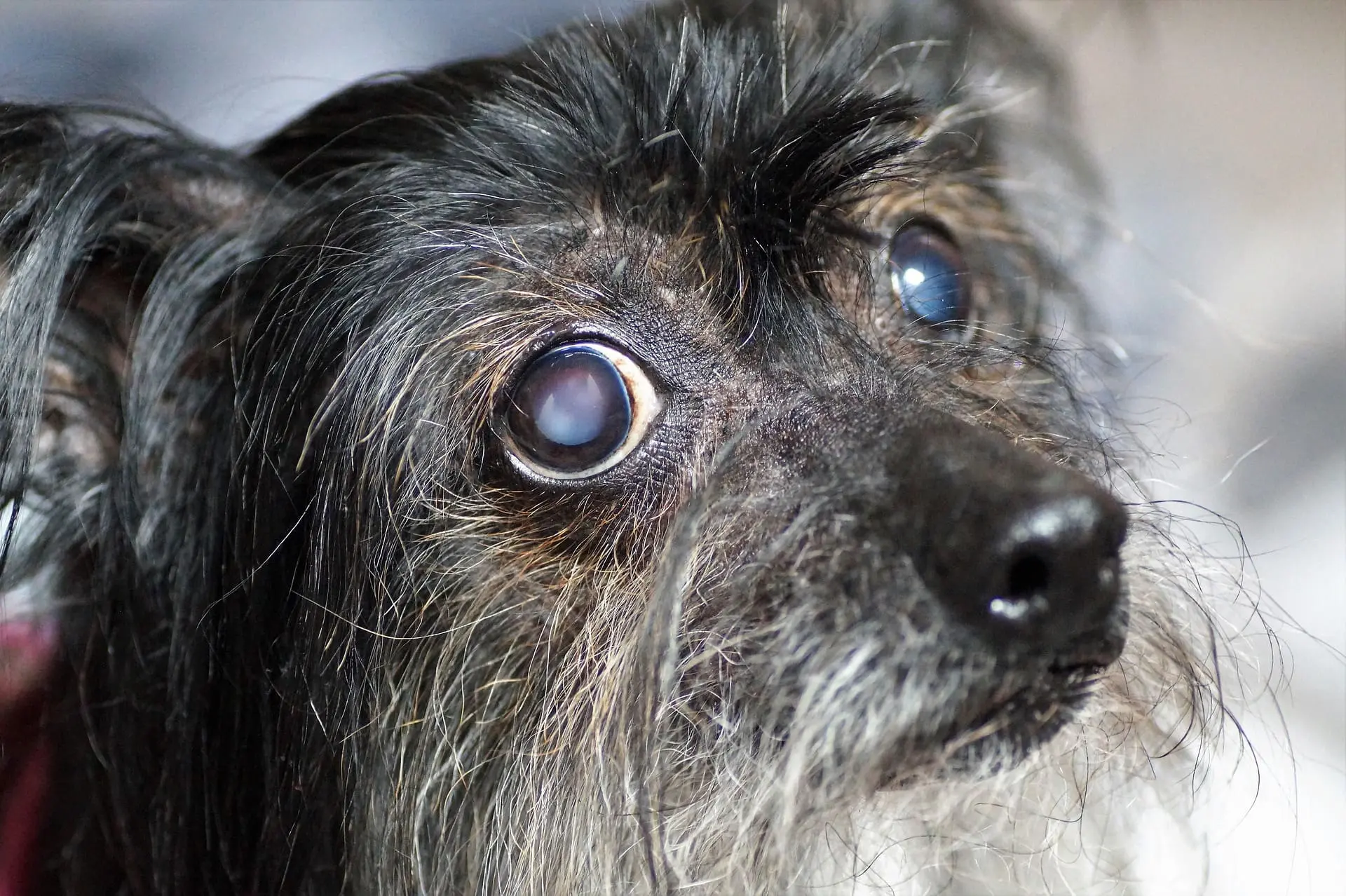
Cataract surgery has become an increasingly common procedure in veterinary medicine. A successful anesthetic event for these procedures requires a complete patient assessment, appropriate equipment, and an understanding of drug pharmacology and neuromuscular physiology. A boarded anesthesiologist has thorough knowledge of these subjects and can ensure your patient has a successful anesthetic event.
Patient Assessment
A comprehensive history, physical exam, and diagnostic workup are essential to safe anesthesia for the cataract patient. Cataract surgery is often performed in geriatric patients with concurrent diabetes mellitus. Information that should be obtained from the history is the current insulin type and dose administered to the patient, the most recent blood glucose curve and/or fructosamine, and any other co-morbidities the patient may have.
If the patient’s diabetes is not well controlled and the patient is not clinically doing well at home, then the procedure should be rescheduled. A full blood panel (CBC/Chemistry/T4) and urinalysis should be performed within 1-2 months of the anesthetic event. If the patient has congenital cataracts and is otherwise healthy, a minimum database and electrolyte panel is generally sufficient to assess for anesthetic risk.
Equipment
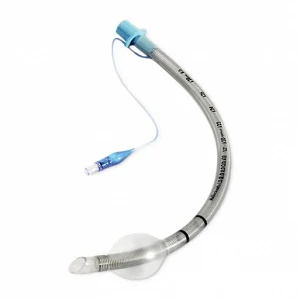
Performing cataract surgery requires some particular anesthetic equipment. A guarded endotracheal tube (i.e., wire reinforced) (Figure 1) is required for intubation of these patients. Cataract surgery is often performed with the patient in dorsal recumbency with the neck flexed. Using a standard PVC endotracheal tube risks obstruction of the endotracheal tube, which can be life-threatening if not detected. An anesthesiologist can train your staff in the usage of guarded endotracheal tubes and detecting the early signs of an airway obstruction.
Neuromuscular blockade (NMB) is necessary for cataract surgery to maintain the central position of the eyes. Evoked motor responses to peripheral nerves are utilized to assess the degree of NMB depth. There are many types of handheld nerve stimulators available. Your anesthesiologist can aid in the selection of the nerve stimulator that works best for your clinic and can train your staff in the appropriate usage.
Because these patients need to be paralyzed for the procedure, a mechanical ventilator is required to maintain normoxia and normocapnia. Ventilating these patients during both maintenance and recovery can be challenging, given the position of the patient, potential patient co-morbidities, and the concern for residual effects of NMB. An anesthesiologist can train your staff to prevent ventilatory complications.
Drug Selection
Drug selection for cataract surgery can vary considerably depending on the patient and the patient’s intraocular pressure (IOP). As noted, patients with cataracts are often geriatric with various comorbidities. In addition, patients with cataracts can also have concurrent glaucoma.
The act of intubation, patient positioning, and positive pressure ventilation can all increase IOP. Working with an anesthesiologist can ensure we incorporate all of these factors to provide an adequate plane of anesthesia, maintain analgesia, and prevent any further ocular complications.
Neuromuscular Monitoring
The site of stimulation for neuromuscular monitoring in small animals is commonly the peroneal or ulnar nerve. Contact electrodes are placed over the nerve, and the motor response is compared with the prerelaxant response. There are several different patterns of nerve stimulation.
The most commonly used clinically is the train of four (TOF). The TOF pattern is the delivery of four supramaximal impulses over 2 seconds (2 Hz). The relaxant level is determined by comparing the fourth twitch (T4) to the first twitch (T1) (T4:T1) ratio. A T4:T1 ratio of > 90% is considered adequate for clinical recovery. TOF is sensitive to residual NMB and is less painful than other stimulatory patterns. Understanding TOF and your nerve stimulator is imperative to preventing residual NMB.
Residual NMB can lead to complications such as hypoxia and aspiration. Return of spontaneous ventilation alone is NOT adequate for determining return of normal motor function. Certain muscles, such as those of the larynx, have a slower return of function than other muscles in the body (Flores 2023). The anesthesiologist will aid your staff in determining the degree of NMB needed for your patient.
Neuromuscular Blocking Agents (NMBA)
NMBAs are a drug class that blocks the binding of acetylcholine (Ach) to nicotinic cholinergic receptors at the neuromuscular junction, preventing nerve conduction and ultimately leading to muscle relaxation. Non-depolarizing NMBAs are the most commonly used paralytics. NMBAs such as atracurium and cis-atracurium were the most popular NMBAs due to their short duration of action and fewer systemic effects.
However, rocuronium, an aminosteroid agent, has become increasingly more popular due to its fast onset, minimal cardiovascular effects, lack of histamine release, and ability to be completely reversed without the use of anticholinesterases (Flores et al 2023). A boarded anesthesiologist can work with your team to decide on the best NMBA for your hospital and how to safely use them in your patient population.
Reversal of Neuromuscular Blockade
Reversal of NMB happens gradually over time. Biotransformation reduces the plasma concentration of circulating NMBAs, which subsequently reduces the concentration at the neuromuscular junction (Flores 2023). For patients who have evidence of residual NMB at the time of recovery, anticholinesterase drugs such as edrophonium, neostigmine, and pyridostigmine have all been utilized to further antagonize NMB.
Use of these agents has several limitations, including: long time of onset, Ach still being outcompeted by NMBAs, and there is a risk of accumulated Ach going into systemic circulation, causing severe bradycardia (Flores 2023). The reversal agent of rocuronium, suggamadex, is becoming increasingly more popular as it forms a complex with rocuronium, lowering drug concentration at the NMJ without blocking the cholinesterase enzymes. Suggamadex can rapidly reverse deep NMB with minimal cardiovascular side effects.
Remote Veterinary Anesthesia Monitoring for Cataract Surgery Patients
Veterinary anesthesia of the cataract surgery patient can become complicated, given various patient factors, equipment needs, and understanding of pharmacology and physiology. A boarded anesthesiologist can support you in these cases to allow for a safe and pain-free experience.
Image by ivabalk from Pixabay used with permission under the Creative Commons license for commercial use 04/30/2026